ADCS
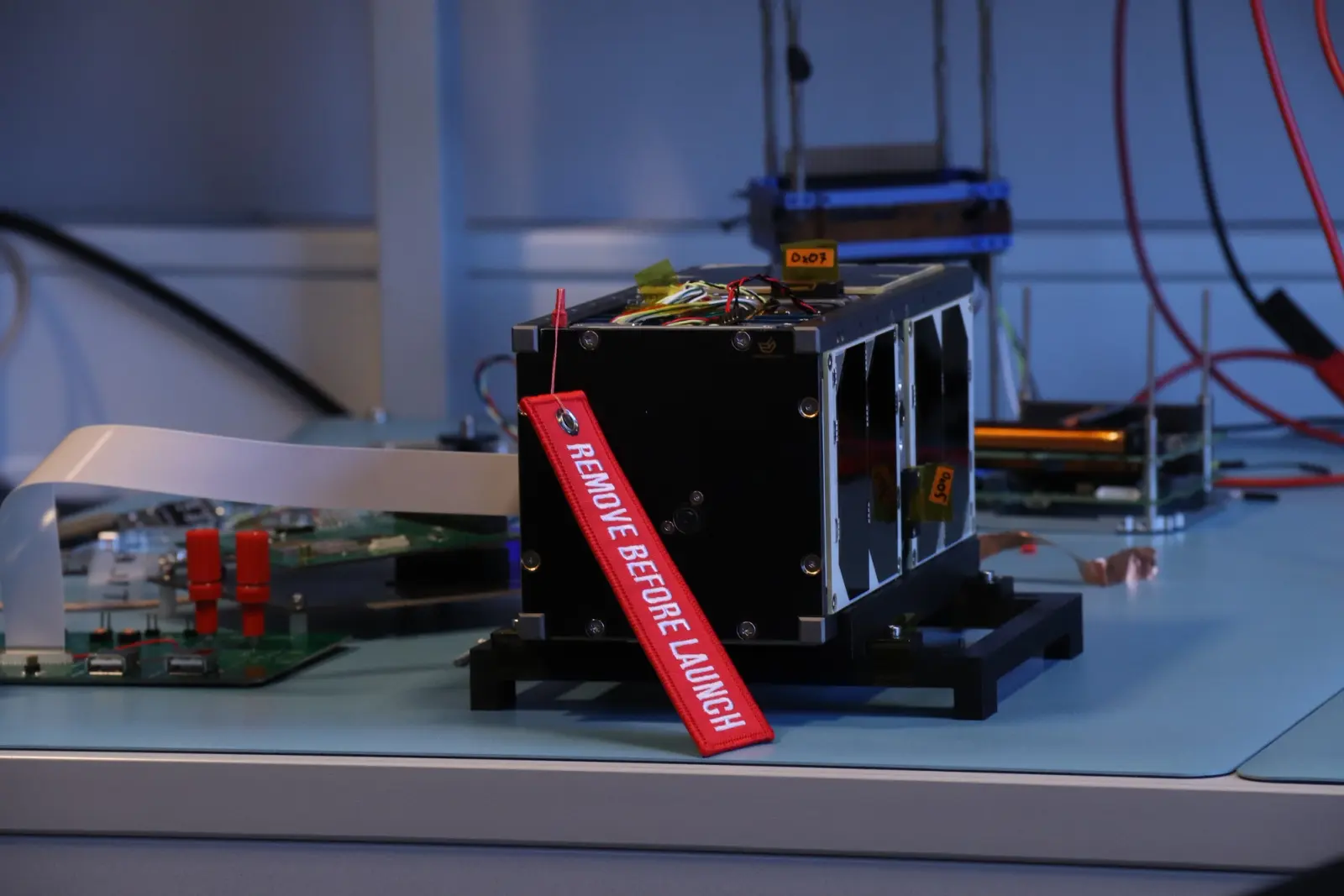
The Attitude Determination and Control System (ADCS) team builds the ADCS algorithms that let a spacecraft know where it’s pointing and control how it rotates. Using onboard sensors, ADCS estimates orientation relative to Earth, the Sun, or stars and actively corrects disturbances. This turns a drifting object into a stable, precisely pointed spacecraft, enabling communication, power generation, and scientific measurements.
Read about ADCSchevron_rightBoard
The board is responsible for managing the organization. The board works closely with Project Management and Marketing to ensure that projects are feasible and budgets are kept. In addition, the board is responsible for the development of the organization, HSE, ensuring that roles & responsibilities are fulfilled, and all other aspects included in the management of a growing student organization. The board makes sure that any project the organization undertakes is in line with Orbit NTNU’s mission, vision, and values.
Read about Boardchevron_rightDevOps
The DevOps team plays a crucial role in optimizing our development and operational environment. The goal is to streamline Orbit as an organization and improve the use of all utilities. Their diverse tasks include integrating autonomy, maintaining servers, ensuring stability at every stage of the software development process, and creating applications, pipelines, containers, slackbots, and much more.
Read about DevOpschevron_rightEconomics
The sponsorship team is responsible for securing the funds behind our projects. For this, we entirely depend on our sponsors. Orbit NTNU's Key Account Managers are responsible for acquiring new sponsors and maintaining our relationship with current partners.
Read about Economicschevron_rightElectronics
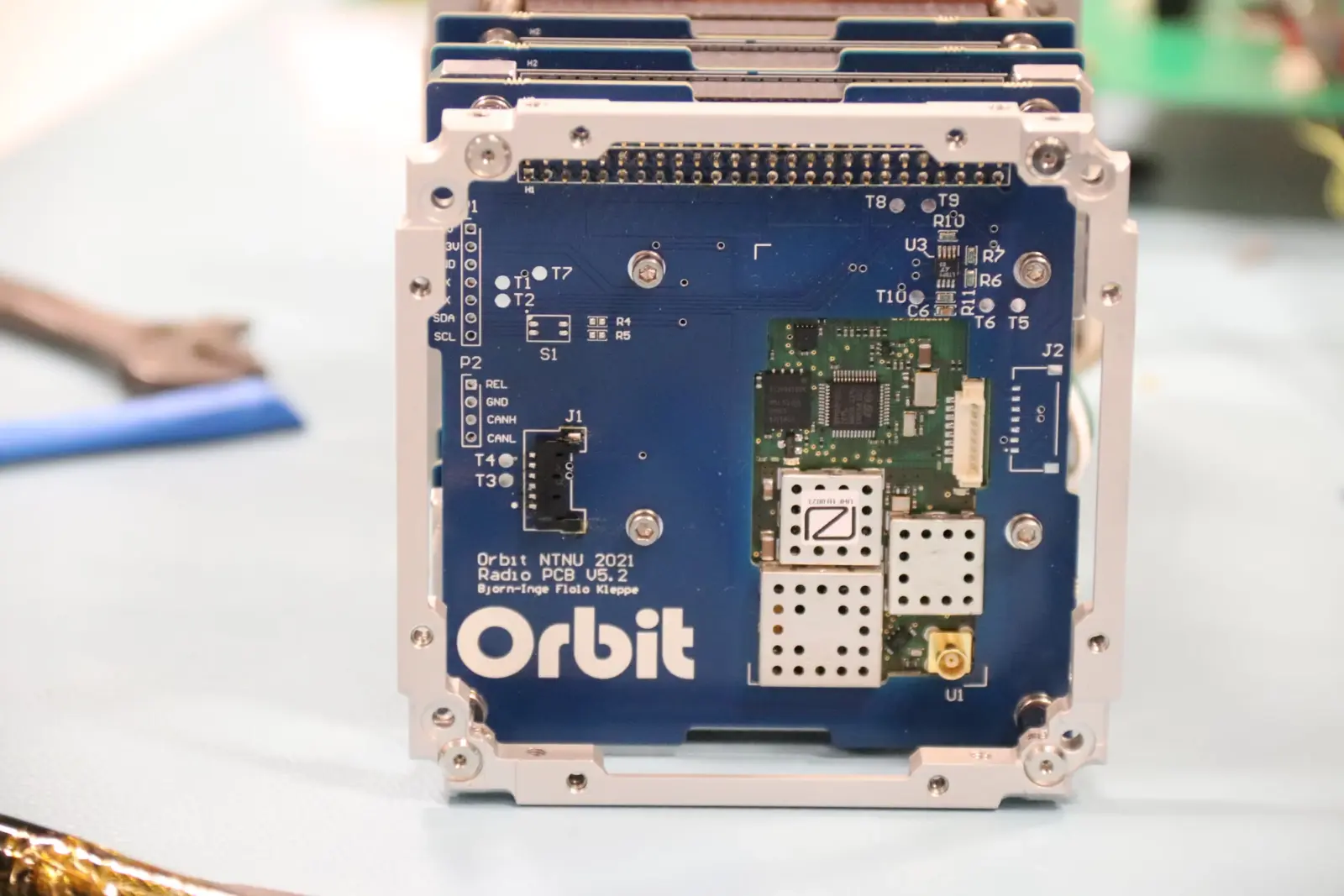
The electronics team (ES – Electronic Systems) is responsible for designing, developing, and producing the electrical systems on the satellite. This includes developing and soldering circuit boards, picking suitable components for the satellites, and assembling space-grade cables. ES is also responsible for powering the satellites, ensuring enough power is delivered to each subsystem efficiently.
Read about Electronicschevron_rightEmbedded Software
The Embedded Satellite Software team is responsible for programming our satellite's main computer and assisting the attitude determination and control team in programming. The main computer handles commands from the ground, monitors the system, and changes its operating modes. It is the satellite's functional center and an essential part of making the satellite operational.
Read about Embedded Softwarechevron_rightEvent
The Event Team in Orbit NTNU is the heart of our community engagement efforts. They plan, organize and execute both external, formal events and internal, social gatherings, orchestrating initiatives that leave a lasting positive impact on our community. Through meticulous planning and seamless teamwork, they breathe life into our vision.
Read about Eventchevron_rightHR
The Human Resource team helps shape the future of the space industry by recruiting and facilitating of our talented individuals. The team manages internal conflicts but also works actively to ensure that Orbit has a work environment where damaging conflicts don't arise.
Read about HRchevron_rightMarketing and Communications
Orbit Marketing communicates who we are and what we do. We represent Orbit across our social platforms, including Facebook, Instagram, TikTok, and LinkedIn. Our team focuses on clear communication and capturing the moments that define our community. Feel free to contact us if needed.
Read about Marketing and Communicationschevron_rightMechanical
The mechanical team works on the structural, thermal, and mechanical aspects of the satellite and the payload. They make 3D models to plan the layout, design mechanical components, run simulations and then build the satellite. They ensure structural integrity concerning vibrations, temperatures, shock, and other hazards. Additionally, they have other projects that work indirectly on building a satellite, like designing and building foldable solar panels, and general test equipment and rigs to assist the other groups.
Read about Mechanicalchevron_rightMentors
The mentor team guides students in their projects and learning. The experienced individuals from NTNU, Orbit NTNU and the industry give technical guidance, project support, and industry information. They help students navigate the complexities of satellite design, construction and operations, fostering a collaborative and innovative environment for hands-on learning and skill development.
Read about Mentorschevron_rightPayload
The payload team is responsible for the designing and development of the system in which the plant is growing. This includes finding plant requirements by testing, asking the right questions, and implementing creative design decisions. The constraints of working in such a small space will bring interesting problems that need to be solved. For example supply systems that provide necessary nutrients, water, and light. There will be a mix of work on the bio-lab and mechanical work.
Read about Payloadchevron_rightPMO
Project Management is responsible for requirement understanding, planning, execution, controlling, monitoring, reviewing, and delivering our projects on time with the help of the whole team.
Read about PMOchevron_rightSatCom
SatCom (Satellite Communication) is responsible for maintaining our ground station and implementing the satellite operations center. The team works closely with the Embedded team to implement the routing of commands from the operations center on the ground to the on-board computer on the satellites, and telemetry and data from the satellite to the center. The satellite and ground station radios are essential to ensure mission success. Much effort is being put into ensuring we have a reliable communication link with high bandwidth.
SatCom is also responsible for the SDR (Software Defined Radio) payload to be on board Biosat.
Read about SatComchevron_rightSub-Orbital
The Sub-Orbital team consists of only first-year students. They create a small satellite released into the earth's stratosphere with a weather balloon. Under the guidance of experienced Orbit NTNU mentors, the team gets unique insight into satellite production, from concept to completion, allowing them to become satellite engineers in a year.
Read about Sub-Orbitalchevron_rightSystems Engineering
Systems engineering is a multidisciplinary field of engineering that focuses on how to design, integrate, and manage complex systems. The SE team coordinates the different teams in Orbit NTNU so that the satellite subsystems fit together and, as a result, make sure that we end up with a complete and fully functional satellite.
Read about Systems Engineeringchevron_rightTest
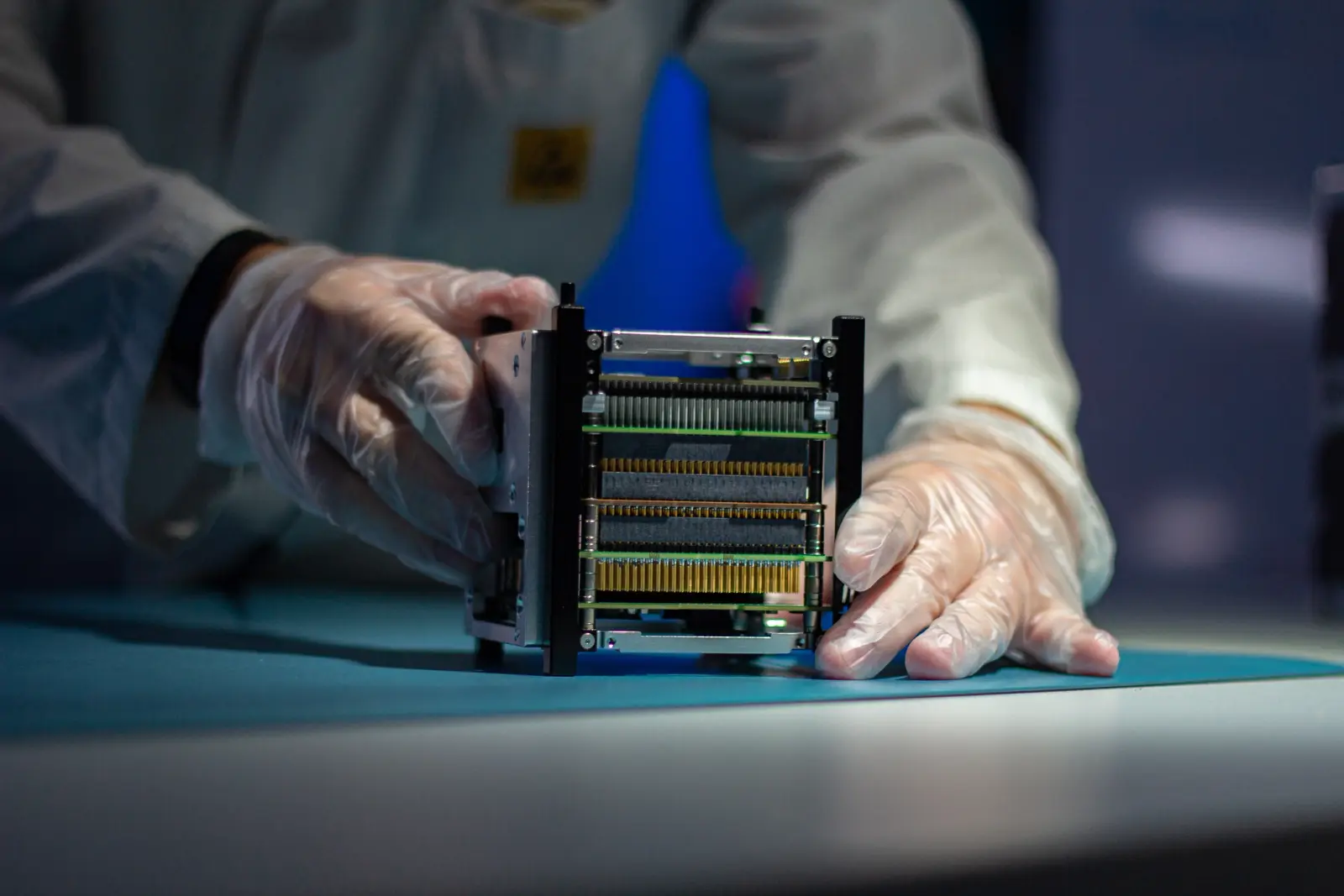
A test team for CubeSats is a specialized group of individuals responsible for conducting various tests and evaluations on CubeSat spacecraft. The test team's primary role is to ensure the CubeSat functions correctly and meets mission objectives before it is launched into space.
Read about Testchevron_rightWeb
The web team is responsible for creating and maintaining our web applications. This includes all steps of the process: design, technical architecture, development, and getting continuous feedback for an iterative development process.
Read about Webchevron_right